
Peptides: What They Are, How They Work, and How They May Support Your Health
July 27, 2026 • 4 min read
If you've spent any time reading about longevity, performance optimization, weight management, or regenerative medicine, you've probably come across the term peptides. They're becoming increasingly popular in functional and integrative medicine—and for good reason.
But what exactly are peptides? Are they safe? And how do you know if they're right for you?
Let's break it down.
What Are Peptides?
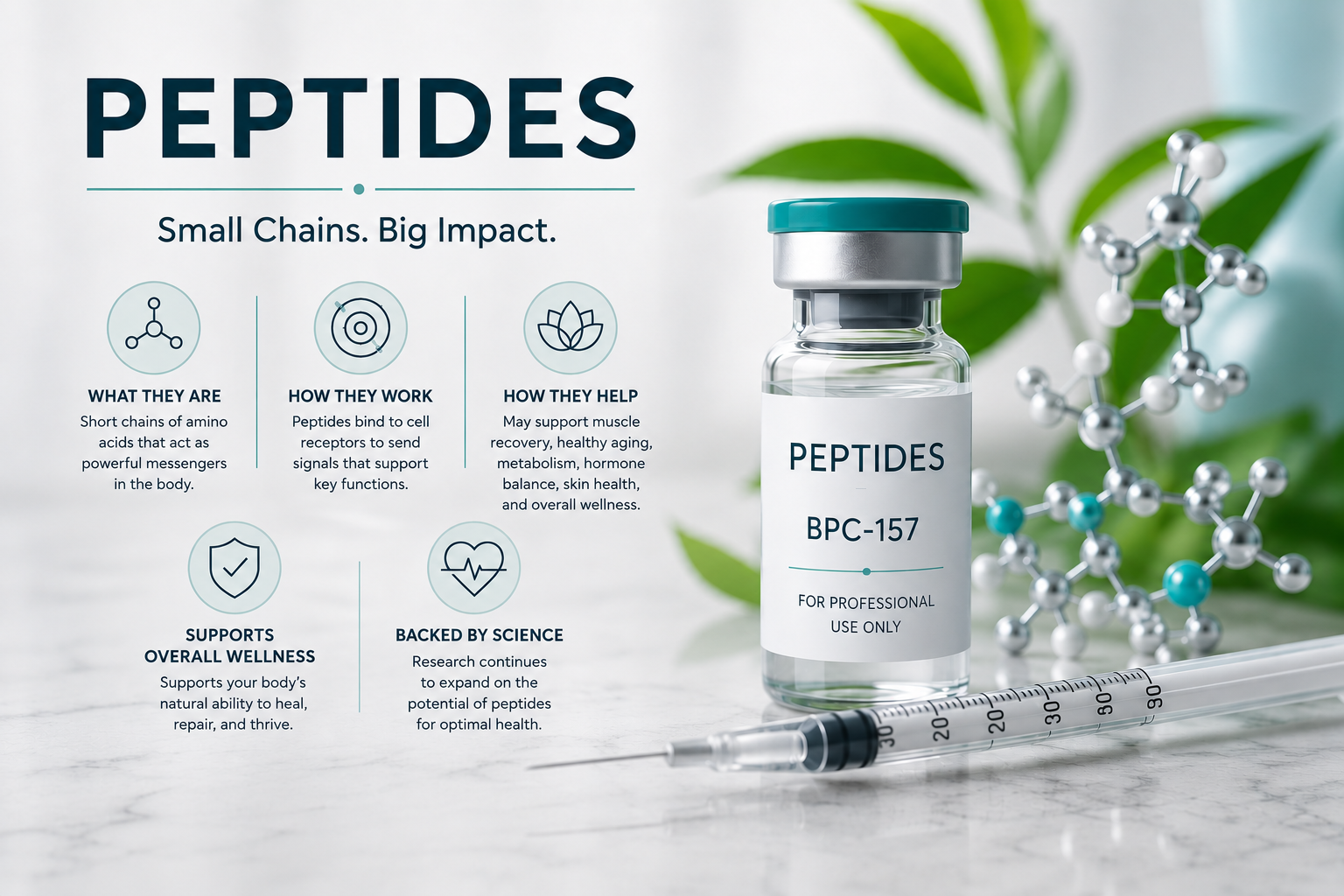
Peptides are short chains of amino acids, which are often called the "building blocks" of proteins. While proteins contain long chains of amino acids, peptides are much smaller, typically consisting of just 2 to 50 amino acids.
Your body naturally produces many peptides, and they play important roles in communication between cells. Think of peptides as tiny messengers that tell your body what to do—whether that's repairing tissue, regulating hormones, supporting immune function, or promoting healing.
In fact, many hormones—including insulin—are peptides.
How Do Peptides Work?
Each peptide has a specific job.
Once a peptide binds to receptors on certain cells, it sends signals that trigger a biological response. Depending on the peptide, these signals may encourage your body to:
Repair damaged tissues
Build lean muscle
Support healthy metabolism
Improve recovery after exercise
Stimulate collagen production
Promote healthy sleep
Support immune function
Encourage healthy hormone production
Support healing and recovery after surgery
Unlike medications that often force the body into a certain response, many therapeutic peptides are designed to enhance or mimic your body's natural signaling pathways.
Potential Benefits of Peptide Therapy
Research into peptides continues to grow, and while many studies are promising, not all peptides have extensive long-term clinical data. Some peptide therapies are FDA-approved for specific conditions, while others are prescribed off-label by trained healthcare providers.
Depending on the peptide used and an individual's health goals, potential benefits may include:
Improved Body Composition
Certain peptides may support healthy weight management by helping regulate appetite, improving insulin sensitivity, or supporting fat metabolism when combined with proper nutrition and exercise.
Faster Recovery
Some peptides are being studied for their ability to support healing of muscles, tendons, ligaments, and connective tissue, making them popular among athletes and individuals recovering from injuries or surgery.
Healthy Aging
As we age, our natural production of certain hormones and signaling molecules declines. Some peptides may help support healthy aging by promoting tissue repair, preserving lean muscle, and encouraging cellular health.
Better Skin Health
Collagen-stimulating peptides may improve skin elasticity, hydration, and overall appearance. Some people notice healthier-looking skin and fewer signs of aging over time.
Hormone Support
Certain peptides may stimulate your body's own production of growth hormone rather than replacing it directly. This may help support recovery, sleep, body composition, and overall vitality in appropriate candidates.
Immune System Support
Some peptides are being investigated for their role in regulating inflammation and supporting healthy immune function, although more research is still needed in many areas.
Are Peptides Safe?
When prescribed appropriately and obtained from reputable, licensed compounding pharmacies, peptide therapy is generally well tolerated by many individuals.
However, peptides are not appropriate for everyone.
Possible side effects vary depending on the specific peptide and may include:
Mild redness or irritation at the injection site
Headache
Nausea
Water retention
Fatigue
Changes in appetite
More importantly, because peptides influence biological signaling pathways, they should always be used under the supervision of a qualified healthcare provider who understands your medical history, medications as well as supplements, and health goals.
Tips for Using Peptides Safely
If you're considering peptide therapy, here are several important guidelines to keep in mind.
1. Work with a Qualified Healthcare Provider
Not all peptide protocols are created equally.
A knowledgeable practitioner can determine whether peptide therapy is appropriate for you, monitor your progress, and adjust your treatment based on your individual needs.
2. Buy from Reputable Sources
Avoid purchasing peptides from online vendors that do not require a prescription.
Products from unregulated sources may contain impurities, incorrect dosages, or ingredients that differ from what's listed on the label.
3. Address the Root Cause
Peptides are not magic bullets.
If poor nutrition, chronic stress, inadequate sleep, gut dysfunction, or hormone imbalances are driving your symptoms, peptide therapy alone is unlikely to provide lasting results.
In functional medicine, we focus on identifying and addressing the root causes of illness while using therapies like peptides as supportive tools—not replacements for healthy lifestyle habits.
4. Maintain Healthy Lifestyle Habits
Peptides work best when combined with:
A nutrient-dense, anti-inflammatory diet
Regular strength training and movement
Quality sleep
Stress management
Healthy blood sugar balance
Adequate hydration
Think of peptides as helping optimize your body's natural healing processes—not replacing the foundational habits that create long-term health.
5. Have Realistic Expectations
While some individuals notice improvements within weeks, others require several months depending on the peptide being used and their health goals.
Consistency, monitoring, and individualized care are key.
Who Might Benefit from Peptide Therapy?
Peptide therapy may be considered for individuals experiencing:
Difficulty losing weight despite healthy habits
Reduced energy
Slower recovery after exercise
Age-related decline in muscle mass
Joint discomfort
Poor sleep
Healthy aging goals
Certain hormone-related concerns
However, every person is different. A comprehensive health evaluation is essential before determining whether peptide therapy is appropriate.
The Functional Medicine Perspective
One of the reasons peptide therapy has gained attention in functional medicine is because it aligns with our philosophy of supporting the body's natural healing mechanisms rather than simply masking symptoms.
That said, peptides are just one piece of the puzzle.
Optimal health comes from understanding how nutrition, sleep, stress, movement, gut health, hormones, environmental exposures, and genetics all work together. When these foundational areas are addressed, therapies like peptides may become even more effective.
Final Thoughts
Peptides represent an exciting and rapidly evolving area of medicine with promising applications in healthy aging, tissue repair, metabolic health, and overall wellness. While they're not a cure-all, they may be a valuable tool when used appropriately as part of a personalized, comprehensive treatment plan.
If you're curious whether peptide therapy might be right for you, the best first step is to work with a qualified healthcare provider who can evaluate your health history, discuss your goals, and develop a plan that's tailored specifically to your needs.
Schedule a call today to see if peptide therapy is a good fit for you!
Remember: Sustainable health isn't about finding one miracle treatment—it's about creating the right environment for your body to heal and thrive.
Disclaimer: This blog is intended for educational purposes only and should not be considered medical advice. Peptide therapy is not appropriate for everyone. Always consult a qualified healthcare professional before starting any new treatment or supplement. Therapeutic peptides are regulated as prescription drugs by the FDA, not dietary supplements. Some peptides are FDA-approved for specific medical conditions, while others may be prescribed off-label or remain investigational.
Bonnie Ridge, FNP-BC, BC-FMP, FMACP, RWP
Functional Medicine Practitioner
